 |
| Credit: NASA/USGS |
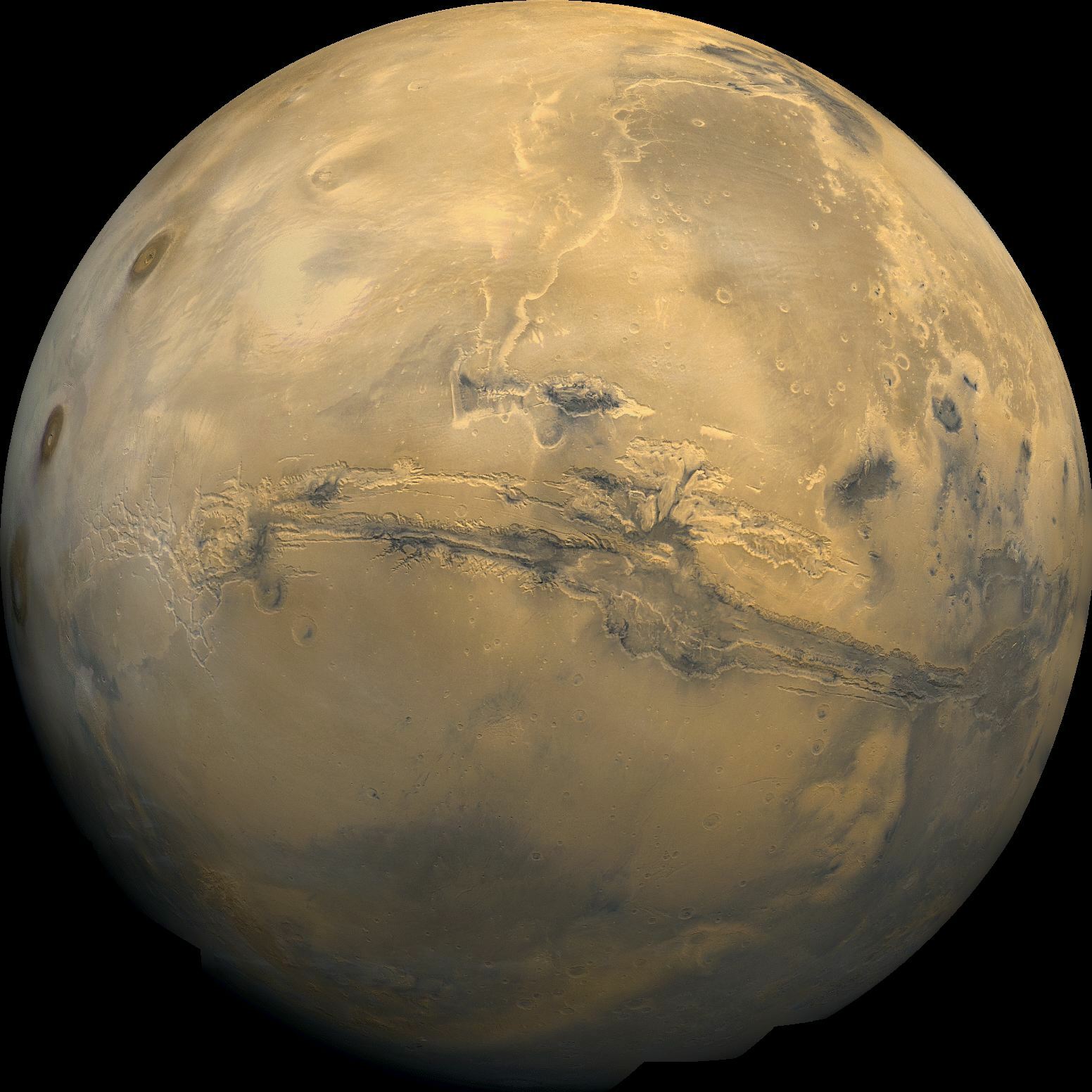
A rose-coloured rock found in the Sahara Desert has been identified as a fragment of Mars that formed about 4.1 billion years ago, making it one of the oldest Martian meteorites ever discovered on Earth, according to a study published in the journal Science. The meteorite, named Teghaza 001 after an abandoned salt-mining settlement in Mali near where it was found in 2022, weighs about 800 grams across eight recovered stones.
The research was led by Yang Liu, a planetary scientist at NASA's Jet Propulsion Laboratory in California, Moneycontrol reported. Of the more than 400 Martian meteorites known to science, only two others, Allan Hills 84001 and Northwest Africa 7034, nicknamed Black Beauty, are comparable in age. The team dated the rock using uranium isotope ratios measured in zircon crystals, which pointed to formation roughly 4.1 billion years ago.
Beyond its age, the meteorite preserves a record of water on the young Red Planet. Its volcanic minerals were altered by Martian water shortly after the rock first crystallised from cooling magma, Space Connect reported. That alteration suggests liquid water was moving through the planet's crust within its first few hundred million years, a period when Mars is believed to have been warmer and wetter than the frozen desert it is today.
The rock's mineralogy and chemistry closely match what NASA's Mars Reconnaissance Orbiter has observed in the cratered southern highlands of Mars, according to Space Connect. The researchers identified 13 possible locations on the planet's surface that fit the meteorite's composition, with the ancient Noachian highlands northwest of the Hellas basin considered the most likely source region. A separate study in Science Advances examined the meteorite's water content in detail.
Scientists say samples like Teghaza 001 are precious because no mission has yet returned rock directly from Mars, so meteorites blasted off the planet by ancient impacts remain the only pieces of it that laboratories can study. The findings give researchers a firmer timeline for when the Martian crust formed and how soon water began reshaping it, according to the studies reported by Moneycontrol and Space Connect.
Sources: Moneycontrol, Space Connect
